Carbon Steel Plates: Rich Specifications Meet Diverse Application Needs
Time : 06/06/2025
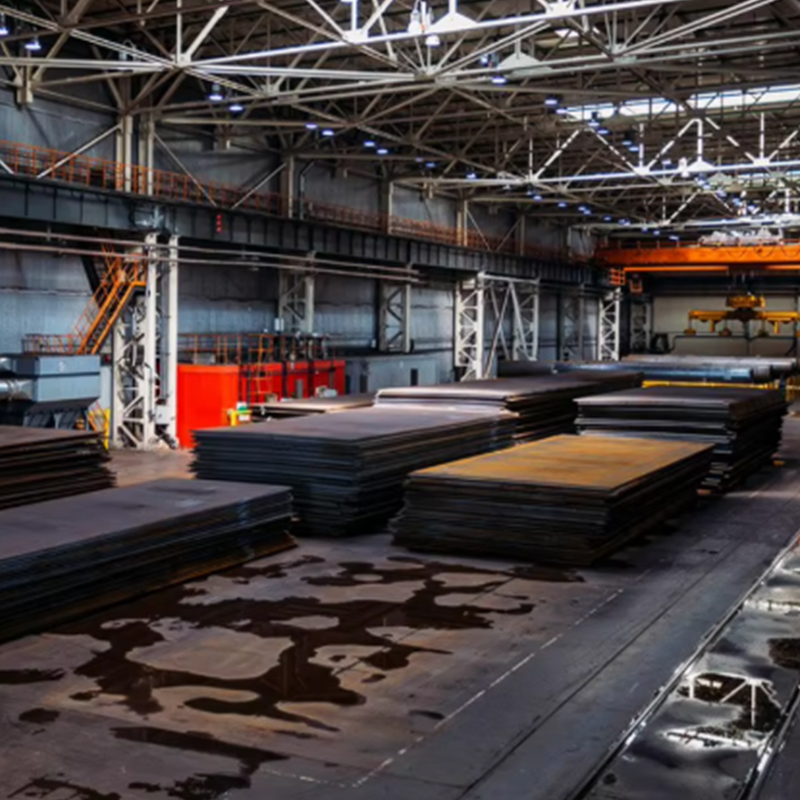
Carbon Steel Plates: Rich Specifications Meet Diverse Application Needs
As a fundamental material in the industrial sector, carbon steel plates, with their diverse specifications, play a crucial role in numerous industries. Carbon steel plates of different thicknesses, widths, and strength grades exhibit strong adaptability according to the requirements of specific application scenarios.
In terms of thickness specifications, carbon steel plates cover a wide range from thin plates to medium and heavy plates. Thin plates usually have a thickness of less than 3 millimeters. Thanks to their good plasticity and processability, they are widely used in fields such as automobile body panels and home appliance casings. These thin plates can be formed into complex shapes through processes like stamping and bending, while meeting the product's requirements for lightweight and appearance. Medium and heavy plates, on the other hand, have a thickness of 4 millimeters or more, boasting high strength and load - bearing capacity, making them an ideal choice for fields such as engineering machinery and building structures. For example, in the construction of large bridges, medium and heavy carbon steel plates, as an important part of the load - bearing structure, provide a solid guarantee for the stability and safety of the bridge.
In terms of strength grades, carbon steel plates are also carefully classified. Ordinary - strength carbon steel plates are suitable for scenarios where the requirement for material strength is not high, such as the manufacturing of general mechanical parts and pipe supports. High - strength carbon steel plates, due to their excellent tensile strength and yield strength, are widely used in fields with strict requirements on material performance, such as heavy machinery and pressure vessels. Take pressure vessels as an example; they often bear high pressure internally. High - strength carbon steel plates can effectively resist the deformation and damage caused by internal pressure, ensuring the safe operation of the equipment.
In addition, the width specifications of carbon steel plates are also reasonably set according to actual production and application needs, ranging from narrow to wide, which can meet the requirements of different processing equipment and product sizes. Wide carbon steel plates have obvious advantages in the production of large steel structural parts. They can reduce the number of splices, improve production efficiency, and enhance the integrity of the structure.
With the continuous improvement of the requirements for material performance in various industries, the specifications of carbon steel plates are also constantly being optimized and expanded. The diverse range of specifications allows carbon steel plates to accurately match the application needs of different fields, providing strong material support for the stable operation of industrial production and the development of various industries.

Guomai Steel (Tianjin) Co.,Ltd

Thank you very much for writing to us. Please leave your message and contact information, we will reply to you within 24 hours.